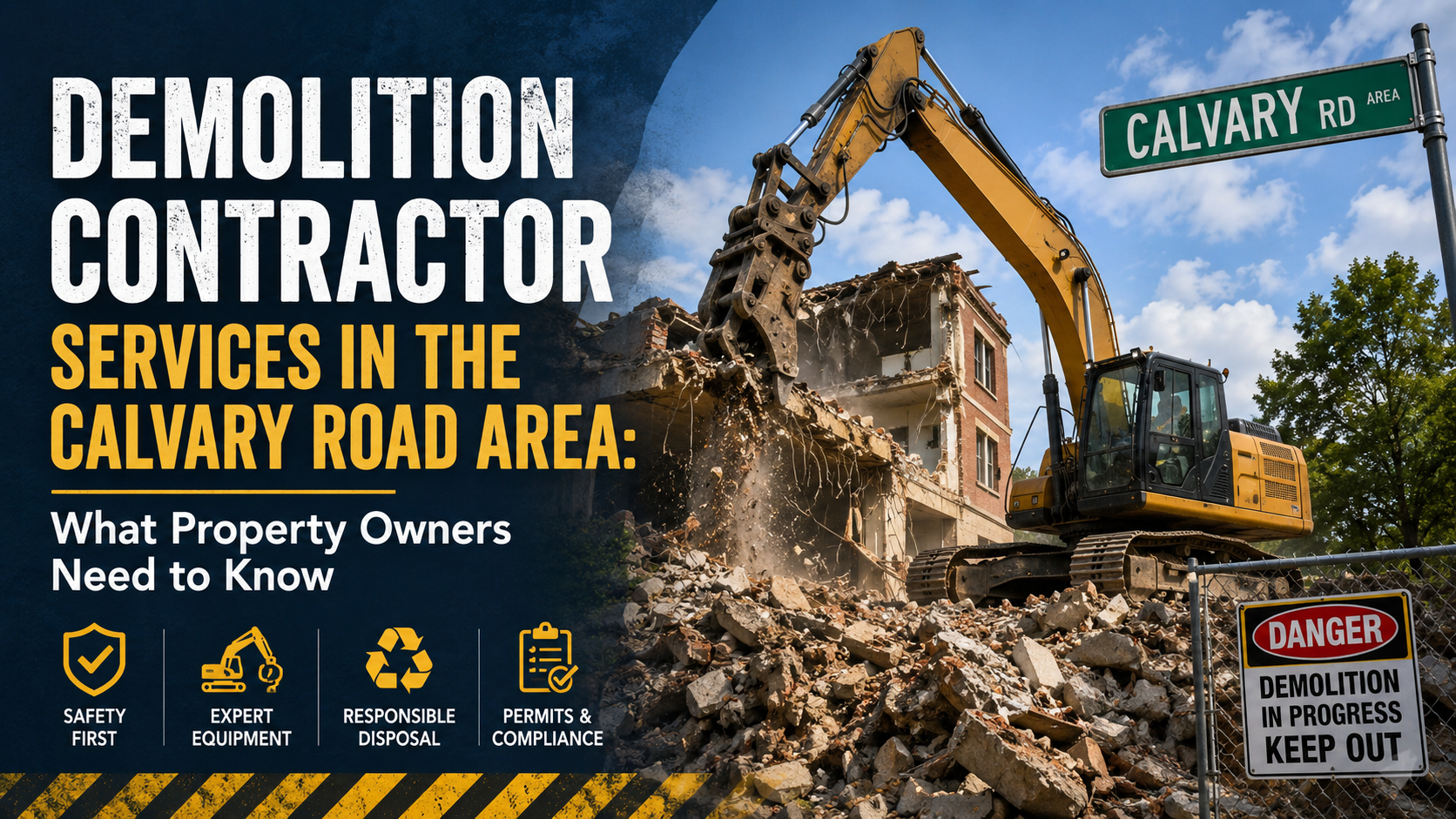
The Calvary Road area is a corridor in Montgomery County, Texas, situated in the greater Lake Conroe and Conroe metropolitan region. Like many of the roads and communities in this rapidly developing part of North Texas, the Calvary Road corridor encompasses a mix of rural-to-suburban transitional properties smaller acreage tracts, older rural structures, and newer residential development that has expanded outward from Conroe’s urban core as the city and surrounding county have grown. Demolition Contractor Calvary Road Area services in this area address the unique needs of properties in this transitional zone, where older agricultural buildings, rural residential structures, and outbuildings are regularly removed to prepare land for new uses.
The Character of Rural-to-Suburban Transitional Demolition
Demolition in the Calvary Road area and similar Montgomery County transitional corridors has a character that differs from purely urban residential demolition. Properties here may include older farmhouses with associated agricultural structures barns, equipment sheds, livestock facilities, and various outbuildings built over decades of rural use. These structures often contain materials not commonly found in urban residential demolition: old agricultural chemicals and petroleum products stored on the property, larger concrete pad areas associated with agricultural operations, and building materials that reflect a long history of informal additions and modifications.
As development pressure from Conroe and the broader Houston metropolitan area pushes outward into these transitional zones, property owners who are converting rural tracts to residential or commercial development need demolition contractors capable of efficiently and safely removing the legacy structures that would otherwise complicate new development. This clearance work is often a precondition for subdivision platting, commercial site plan approval, or construction financing.
Types of Structures Commonly Demolished in the Calvary Road Area
- Older rural residences: Farmhouses and rural homes built from the early to mid-twentieth century, many of which contain asbestos-containing materials and lead paint requiring appropriate handling before demolition.
- Agricultural outbuildings: Barns, equipment storage sheds, livestock shelters, and poultry houses that are obsolete or unsafe and must be removed before a property can be developed for its new intended use.
- Mobile homes and manufactured housing: A common structure type in Montgomery County’s rural transitional areas. Mobile home removal requires specific approaches depending on condition older mobile homes may contain asbestos in their original construction materials.
- Concrete slabs and foundations: Equipment pads, barn floors, and residential foundations must be broken up and removed to allow proper site grading for new construction.
- Old water systems and septic infrastructure: Older rural properties may have aging well systems, cisterns, and septic tanks that require proper abandonment or removal in accordance with Texas Commission on Environmental Quality regulations.
Environmental Responsibilities in Rural Demolition
Rural properties in the Calvary Road area can carry legacy environmental concerns that urban residential demolition typically does not. Old petroleum storage tanks above-ground or underground used for agricultural equipment fueling may have released fuel that has contaminated surrounding soil. Older agricultural chemical storage areas may have soil contamination from pesticide or herbicide storage and use. Asbestos in older agricultural buildings, while perhaps less regulated than in commercial structures under Texas law, still poses health risks if disturbed and should be properly surveyed and handled.
Property owners who discover or suspect environmental contamination on their property during demolition planning should engage an environmental consultant before proceeding, as disturbing contaminated soil without appropriate assessment and planning can expand the area of impact and create liability under Texas environmental statutes.
Land Clearing and Site Preparation in the Calvary Road Area
In the rural-to-suburban context of the Calvary Road corridor, demolition contractor services are often combined with or followed by land clearing and site preparation work. After structures are removed, the cleared parcel typically requires grading for drainage, removal of tree stumps and root systems, installation of erosion control measures, and preparation of the pad site for new construction. Contractors who provide the full sequence demolition, debris removal, grading, and site preparation offer the efficiency of a single point of coordination for what is often a complex, multi-phase project.
Regulatory Considerations for Calvary Road Area Projects
The Calvary Road area is predominantly in unincorporated Montgomery County, meaning City of Conroe building permit requirements may not apply. However, Montgomery County does administer subdivision regulations and infrastructure requirements for development projects, and state-level TCEQ requirements for asbestos, solid waste, and stormwater apply regardless of the structure’s municipal status. Before beginning any demolition project in the area, confirming the applicable regulatory framework with both Montgomery County and the Texas TCEQ is advisable.
Conclusion
Demolition contractor services in the Calvary Road area of Montgomery County reflect the transitional character of this part of North Texas a region moving from rural to suburban at a pace driven by Houston’s metropolitan growth. Property owners preparing rural or transitional properties for redevelopment need demolition contractors who understand the specific considerations of rural structure removal, including agricultural building types, potential environmental legacy concerns, and the coordination of demolition with land clearing and site preparation for new development.